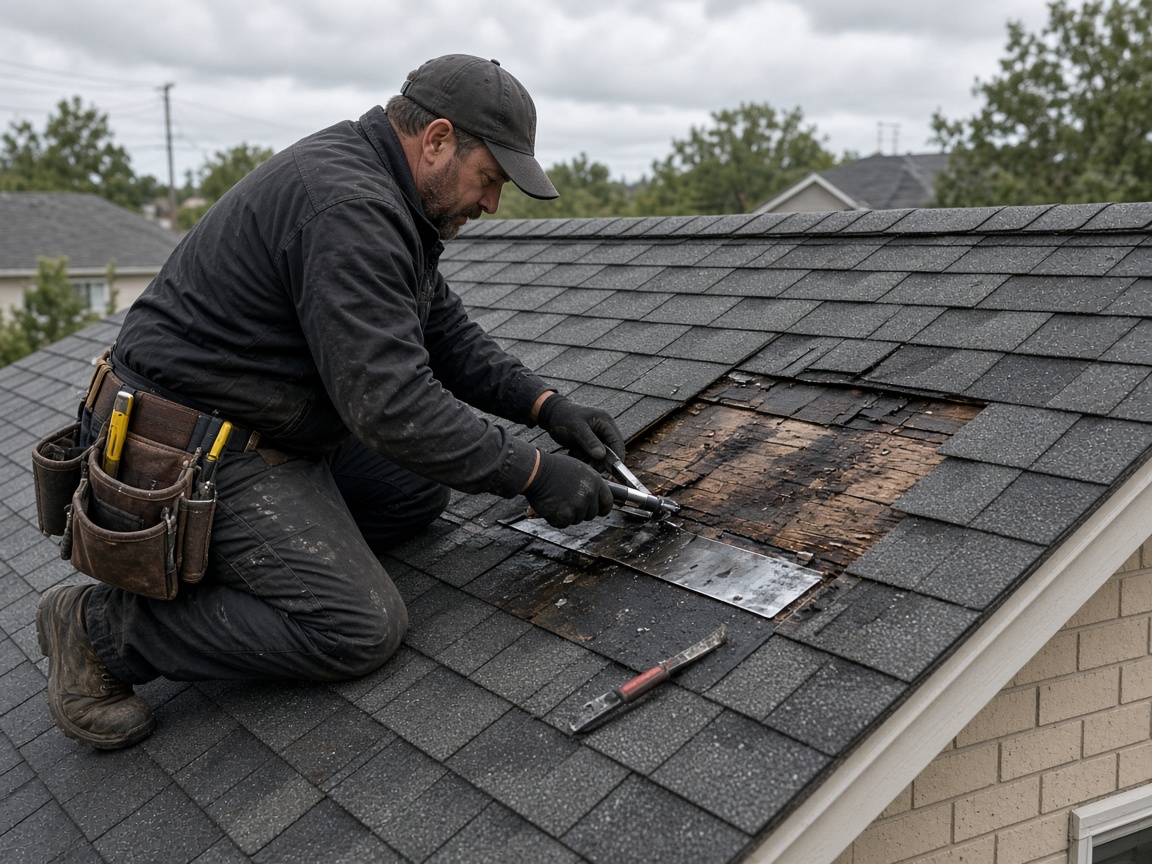
Garland homes built before the 1990s in North Garland and around Duck Creek often have asphalt shingles that have seen repeated expansion from hot humid summers followed by mild winter rains. Leaks commonly start at flashing around chimneys or where tree limbs from Spring Creek Nature Preserve edges drop debris. The pros we connect you with start by tracing water paths through attics rather than assuming the obvious hole, because humidity can push moisture sideways under layers for weeks before it shows on ceilings.
Firewheel and Downtown Garland neighborhoods sit on slightly higher ground but still face wind-driven rain from Dallas storms that forces water under ridge vents and ridge cap shingles. Older ranch-style roofs here frequently have two or three layers, which traps water and speeds deck rot once a leak begins. Proper repair means removing enough material to reach sound wood, not just slapping on sealant that fails the next time temperatures swing.
Mild winters do not freeze pipes but they do allow standing water to sit in low spots near Firewheel Town Center developments where drainage slopes were cut short during original construction. The pros we connect you with check for these hidden valleys and recommend targeted section replacement instead of full re-roof when the rest of the roof remains serviceable.
Richardson and Mesquite border homes share the same soil movement issues that crack masonry chimneys and pull flashing away. Any repair must account for that ongoing movement or the seal will open again within a season.
Technician insight
In Garland, the thing that catches most people out with roof leak repair is two-layer roofs on 1970s homes in North Garland and Duck Creek. Homeowners think a quick sealant patch will hold, but the trapped moisture between layers keeps the deck wet long after the visible drip stops, and the next humid summer pushes it sideways into the living space.
Duck Creek Ranch Leak
Water stains appeared on a bedroom ceiling after a summer storm. The pros we connect you with found the leak had traveled under two layers of shingles from a lifted ridge cap near a valley. They removed a four-foot section, replaced the wet decking, and reinstalled matching shingles so the repair blended with the rest of the roof.
How it works
- 1
On-Site Leak Tracing
The pros we connect you with inspect the attic and roof surface in Garland neighborhoods to locate active water entry points.
- 2
Targeted Material Removal
Damaged layers are cut back to solid decking so new flashing and shingles tie in cleanly without trapping moisture.
- 3
Flashing and Seal Restoration
New step flashing and counter flashing are installed around penetrations common on older Garland roofs.
- 4
Final Water Test
Hoses simulate heavy rain to confirm the repair holds before the crew leaves the property.
Pricing
Cost depends on roof access, number of layers, and whether deck repair is needed.