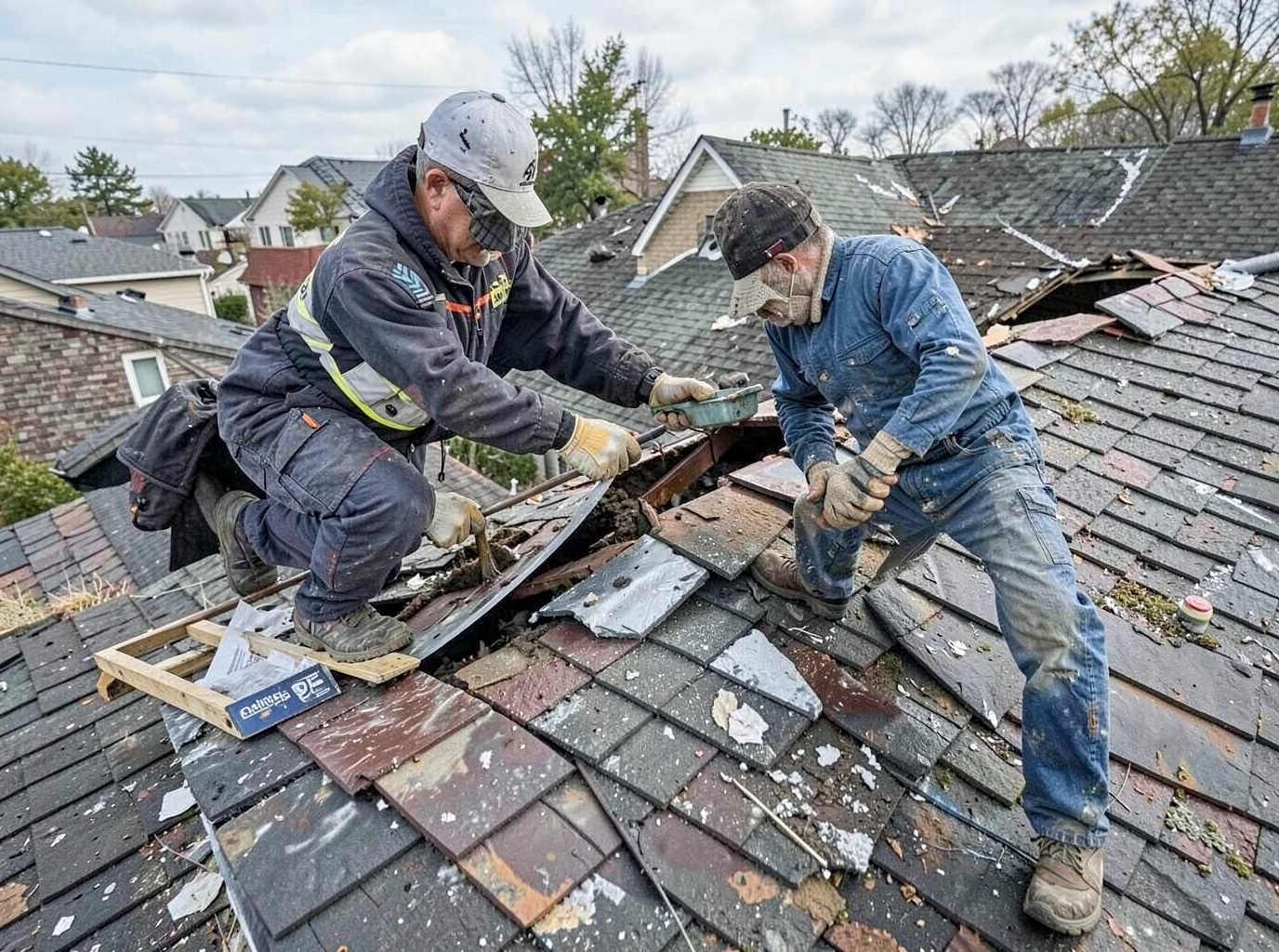
Garland experiences sudden thunderstorms that bring high winds and occasional hail even during its mild winters and hot humid summers. Homes in neighborhoods such as North Garland and Duck Creek often feature composition shingle roofs installed decades ago that can suffer torn tabs, lifted edges, and granule loss after these events. The pros we connect you with inspect for hidden deck damage and check flashing around chimneys and vents where water enters first. They also evaluate impact from nearby tree cover along Spring Creek Nature Preserve that can worsen wind-driven debris strikes. Proper documentation of damage patterns helps distinguish storm claims from normal wear common in Dallas County housing stock.
Repair work here frequently involves matching existing three-tab or architectural shingles while addressing underlayment that has been compromised by prolonged humidity. Edge cases include stepped flashing failures on homes near Firewheel where wind-driven rain follows the slope into attics. The pros we connect you with remove only the affected sections rather than entire slopes when possible, then seal seams to prevent moisture migration during the next humid summer. They also verify that any new materials meet current Garland wind-load expectations for structures close to major roads like those leading into Downtown Garland. This targeted approach reduces unnecessary waste and keeps repairs aligned with the age and construction details of local homes.
Terrain in areas like Duck Creek creates drainage challenges after storms because slight slopes direct water toward foundations if gutters are clogged or downspouts are displaced. The pros we connect you with examine both roof and immediate drainage paths to stop secondary water intrusion into crawl spaces or garages. They coordinate temporary protective measures when full repairs must wait for material delivery from suppliers serving the broader Dallas metro. Attention to these details prevents mold growth that thrives in Garland’s humidity and avoids conflicts with insurance adjusters who inspect properties across Richardson and Mesquite as well.
Technician insight
In Garland, the thing that catches most people out with Storm Damage Roof Repair is how wind-driven rain follows the seams on 1970s three-tab shingles common in North Garland after summer storms, letting water travel under the felt and into the attic even when the surface looks mostly intact.
Wind Uplift Near Duck Creek
A Duck Creek home showed lifted shingles after a line of storms moved through from Dallas. The pros we connected found torn underlayment and water tracking along the deck seams. They replaced the affected slope section, resealed flashing, and added extra fasteners at the eaves. The attic stayed dry through the next humid period.
How it works
- 1
Damage Assessment
The pros we connect you with inspect the full roof surface, attic, and surrounding drainage on your Garland property to map all storm-related issues.
- 2
Documentation and Scope
They photograph affected areas and note material types so repairs match existing shingles common in Firewheel and North Garland homes.
- 3
Temporary Protection
When needed, crews install tarps or seal leaks immediately to prevent further water entry during humid weather.
- 4
Targeted Repair
Damaged sections are replaced or reinforced using compatible materials while addressing flashing and underlayment in one coordinated visit.
- 5
Final Walkthrough
They review the completed work with you and explain any ongoing maintenance steps suited to Garland’s seasonal patterns.
Pricing
Costs vary with roof size, extent of hidden deck damage, and material match required in older Garland neighborhoods.